Today, there are two different ways of farming – industrial and sustainable. Industrial agriculture is the modern way of farming when factories mass produce food. Sustainable farming is when farmers use the traditional way of farming using environmentally, economically, and morally correct methods to produce healthy food.
Most of the foods we find in our local grocery store are made from industrial agriculture. Are they actually healthy, cheap and the solution to world hunger?
 |
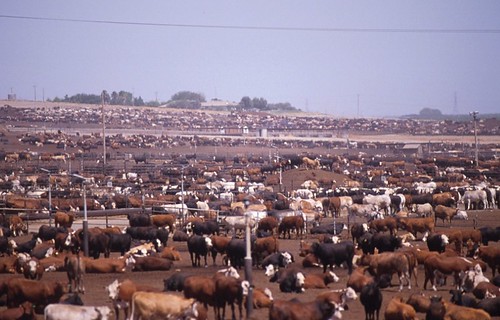
Cows in industrial farms. |
Industrial agriculture uses chemicals to mass produce food. The pesticides used in industrial farming would leak into the soil, which eventually leak into the ground water and lakes, poisoning the water. When an animal gets sick, they are injected with antibiotics. When we eat the animals, we are more resistant to antibiotics, making medicine less effective. In order to mass produce food, they inject animals with hormones to quicken their growth process (see right).
 |
Cows in sustainable farms. |
In sustainable agriculture, however, they try to prevent the use of pesticides by using biological control and pest-resistant plants to control unwanted pests. Instead of using antibiotics, sick animals are pulled away from the herd. Animals are treated with respect; they carry out their natural behaviours and hormones are not used (see right).
Most people believe that food made from industrial agriculture is cheaper than food made on sustainable farms. For example, organic bananas cost around $0.79/lb while non-organic bananas cost around $0.69/lb. At first glance, non-organic food may seem cheaper, but once you factor in the price for treatments and risks in health, it is much more expensive.
Does industrial agriculture provide more diverse choices? No it doesn’t. Industrial farming uses a technique called monoculture crop system, where they only produce one type of crop. Sustainable agriculture uses different techniques which would preserve biodiversity.
The most misbelieved fact about industrial agriculture is that it would help save the world from hunger due to the mass production of food. However, this isn't true. Poverty is usually not due to lack of food but not being able to get access to food. Industrial agriculture increases the chance of poverty. It increases the general cost of farming, so it is now harder for farmers to produce food on their own to support their community. The lack of farmers would lead to lack of food production. This is then compensated by using industrial agriculture to mass produce food.
I think that the benefits of industrial agriculture do not outweigh the risks. It’s like saying that it’s better to eat food that could potentially kill you than to spend more money for a not only a healthier but a more ethnical choice. I think that the largest problem is not convenience and price but the lack of information and knowledge to the consumers. If people were well educated about the dangers of industrial agriculture, I think that they would choose sustainable agriculture over industrial (watch video to see more ‘myths’ about industrial agriculture).
Child educating adults about industrial farming.
RESOURCES:
PICTURE RESOURCES:
VIDEO RESOURCE:
COMMENTS:


1 comments:
You have taken away my breath, Karen! That was a grammatically correct and flowing post! Beautiful.
I agree with your statements, about how industrial farming only leads to more world hunger, not to mention the greedy corporations here in the western world who are all about money. The thought of my food being genetically modified may hinder my willingness to eat dinner tonight, the social implications of this issue is still in debate while slowly destroying our planet. I've seen many, many, videos of industrial farming and I must say, it never ceases to sicken me. Good job!
Post a Comment